Worried about the future of social media and how this might impact your role?
David C. Weinczok FSAScot joined The Trimontium Trust as their new Heritage Interpretation Officer in January 2024. David’s had a varied career, working freelance as a Scottish historian, researcher, author and speaker. He’s also worked at other organisations in the sector, including as a Digital Media Content Creator at National Museums Scotland (NMS).
In his new role, David scripts the narrative and storyboards the visuals for The Trimontium Experience, delivers these sessions with other members of staff, and runs Hands on History sessions. He estimates that he spends only 5-10% of his working time on digital media projects.
For our October 2024 event, David shared advice on which social media skills he’s been able to transfer to his new role and some job-hunting tips for anyone looking to transition away from digital and social media-based work into something else in the world of Scottish heritage and museums.
Transferable Skill 1: Knowing How to Identify and Articulate a Story
Creating social media content is a microcosm of editorial work. You need to not only determine what topics to cover in the first place, but to research those topics to ensure your information is correct and up to date, find a narrative hook to hang them on, use words and phrases which people both with and without knowledge of the subject will find engaging, and tie it all up with some kind of conclusion or call to action.
In short, what you’re doing is a miniature version of editorial decision-making, specialist research and fact-checking, copywriting and editing, marketing, and storytelling all combined into a single output. These skills make you well-placed to work in any role which involves conveying information to the public, devising marketing and communications strategies, writing and editing, and measuring impact.
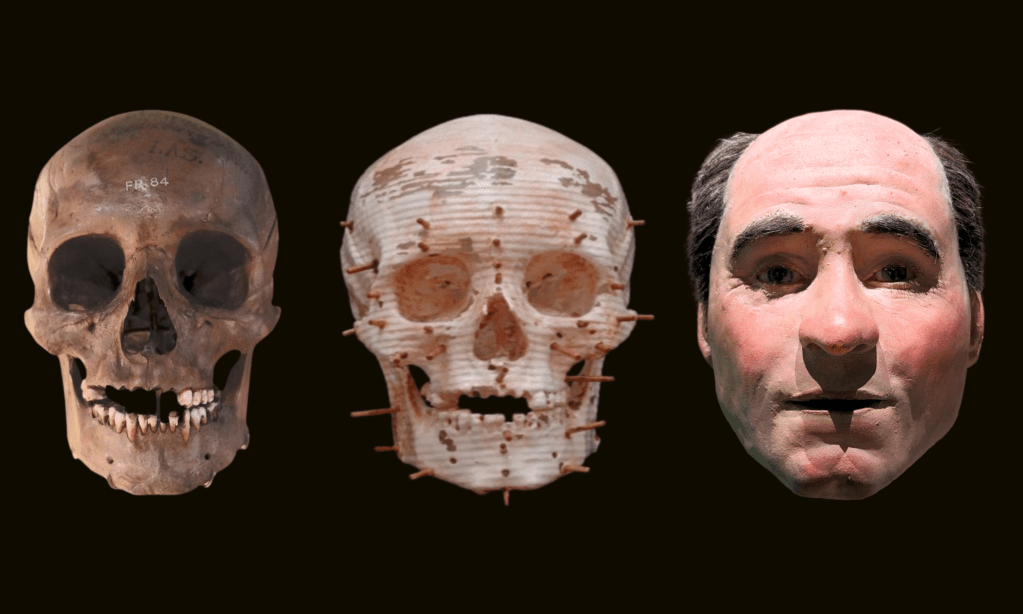
For example, in his role at Trimontium, David wrote a press release about recent specialist scientific research on ‘Trimontium Man’, a skeleton found at the fort site. He had to distil specialist scientific information into a digestible format for the press and general public, find the most important pieces of information to emphasise, devise an intriguing headline and narrative hook, and entice readers to visit the museum off the back of these new findings – all within a fairly tight word limit, which working in social media certainly prepares you for!
While there are of course some differences between writing long-form copy and creating social media posts, the fundamentals are very much the same. You can therefore think about roles in public communication, marketing, and content writing when looking for your next opportunity.
Transferable Skill 2: Website Development
Every museum and organisation has a website, and every website could be better. But many museums, especially smaller ones, don’t have the in-house expertise to be able to confidently make edits or restructures to their websites.
If you’ve worked in social and digital media, it’s likely that you have at least some of the skills required to optimise websites, even if you don’t understand HTML or any programming language. This means you’re well-placed to use website work as part of your pitch or application.
David’s changes on Trimontium’s WordPress site included restructuring the parent and child pages for a clearer progression between them, an accessibility sweep (adding alt-text to all images, ensuring that accessibility information is easy to find), adding more and better images (body images, headers and footers, and hero images), and using more internal and external links to improve search engine optimisation (SEO).
None of this required super-specialist skills, but all of it contributed to a better website experience for visitors and a clearer sense of online identity for the museum.
In short, ANY web editing skills you have can serve as a desirable ‘wedge’ with which to open doors. Tack it on to any application or pitch, and it’s likely that it’ll appeal to the people making the hiring decisions.

Transferable Skill 3: Image Editing
As social media content creators, you’ll have had a great deal of experience editing images. It sounds obvious, but not all organisations have people who are able to do this.
This includes creating more dynamic visuals by adding labels, text, and other graphics, ensuring that image formats are conducive to different ways of accessing social media and websites (such as mobile vs desktop vs tablet), and creating composite images which combine existing assets into something new which works well not just online, but in marketing materials and even gallery displays.
The image he created of the stages of the Trimontium Man facial reconstruction, for example, is now part of the display of the reconstruction within the gallery itself.
Think of all the places where high quality and attention-grabbing images are needed. If you’ve worked in social media for any length of time, you’ll be able to create these for all but the most specialist of functions at museums and heritage organisations.
The same goes for multimedia. You’ve likely worked with video and audio assets as well as with images. Perhaps you’ve even produced your own podcast, created videos for your museum’s YouTube channel or social media profiles, or written long-form editorial content which includes multimedia elements. If so, this is yet another ‘wedge’ you can use to secure a role for yourself, as people with this kind of experience can create all kinds of useful assets for museums.
Transferable Skill 4: Project Management
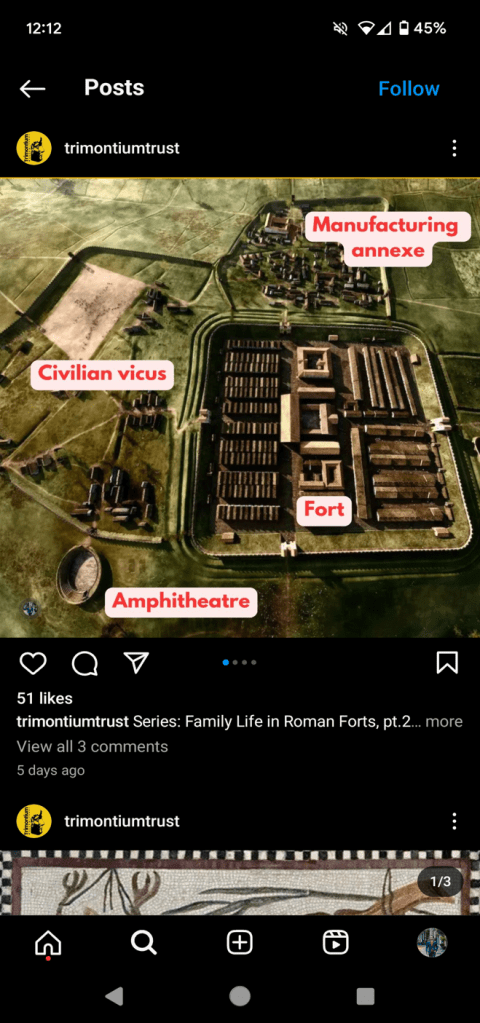
Working in social and digital media is, by necessity, a project management role. Even making a single post for Instagram, for example, often requires multiple steps and multiple people, including but not limited to:
- finding stories in the first instance via colleagues and specialists
- fact-checking those stories and ensuring that your own wording about them is accurate to the current state of knowledge in whatever field is relevant to the post
- having posts reviewed by a manager, and ensuring that they’re approved by other departments like marketing and public relations
- working with multimedia producers on visual assets to accompany stories
- consulting with external experts or stakeholders to ensure that their interests are reflected in your content
- planning and implementing a content strategy, and coordinating with others in your organisation to ensure that that strategy meets organisational needs
- sending published content to relevant and interested parties both within and outwith your organisation
- knowing which other social media profiles, news outlets, industry experts, etc. to tag in order to widen the reach of your content
Look back on all that and you’ll realise that what you are actually doing in social and digital media is coordinating within and across teams, balancing the interests of multiple stakeholders, and increasing your reach with targeted contacts. All of that is applicable to project management in general.
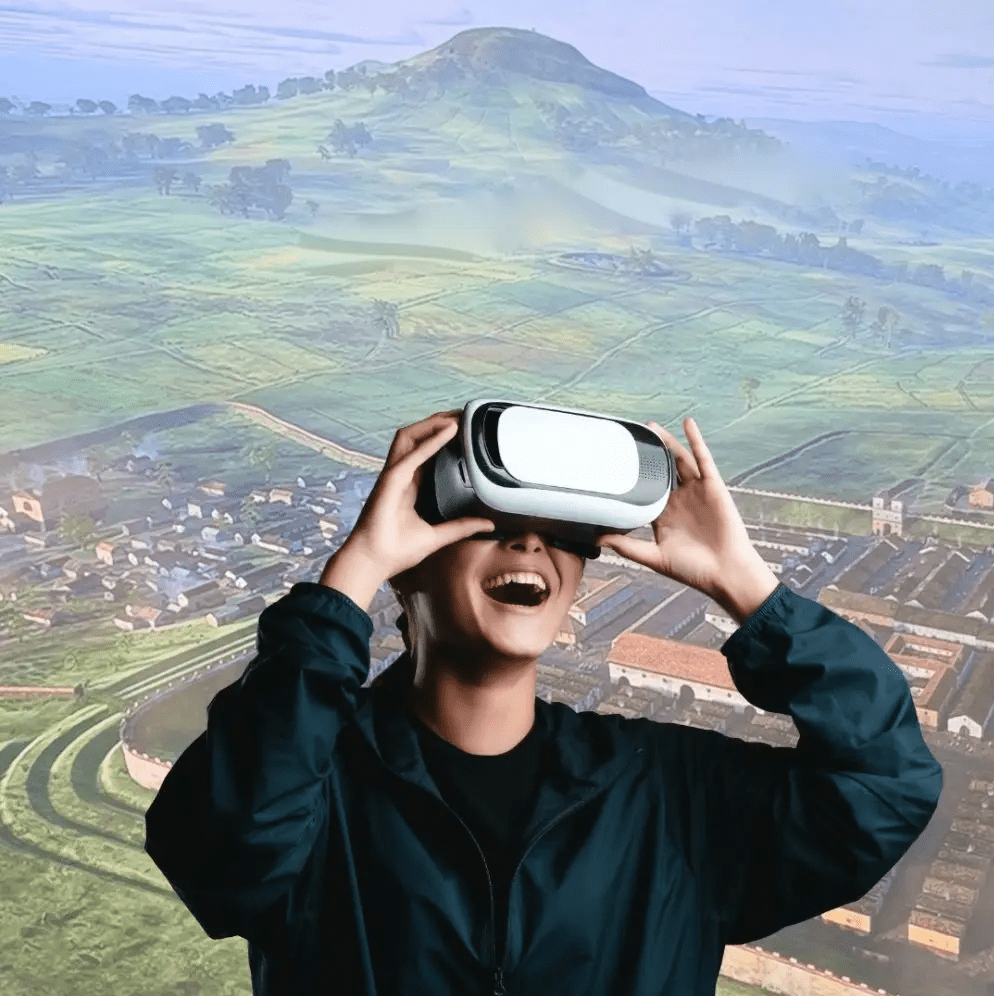
In his Trimontium role, for instance, David developed the script for The Trimontium Experience without ever having written a script for a VR experience before. He needed to ensure that everything aligned with their in-house experts, the tech people who actually created the assets, the actor who voiced the centurion who guides visitors through the experience, and the staff and volunteers who would deliver and inform visitors about the end product.
Now that the SHSMG audience knew what to put on their CVs, David shared his job-hunting tips:
Don’t Wait for the Perfect Job Listing
When David saw a listing at Trimontium Museum for a HALO Project Facilitator, he noticed that the position was full-time (when he was after a part-time role) and involved a degree of project management (which he didn’t have too much experience with or interest in). So, he got in touch to see if they’d be willing to discuss a variation on the role and his potential involvement with it. They agreed, and David met one of the Trustees and made his case.
By citing his experience, expertise and enthusiasm, he was able to secure an interview and subsequent job offer – and he credits a lot of his success in the application process to his skills developed through social media.
Review Your Job Title
If you’ve ever done work on SEO, you know that keywords are important for websites, but did you know that they’re also important for job titles?
Don’t be afraid to keep one eye on the future and request a change. For example, David had the job title changed from ‘HALO Project Facilitator’ to ‘Heritage Interpretation Officer (HALO)’ after a few months in the role.
Explore the Hidden Market
David believes that a large proportion of jobs in heritage and museums – perhaps 40% to 50% – are gained not through vacancy listings, but through the ‘hidden market’. This is the network of personal recommendations, of direct appointments without any job ever being listed, and – as is the case with his job at Trimontium – of people finding organisations which might need someone with their specific set of skills, and effectively making up their own job on that basis.
His role with Trimontium wouldn’t exist if he hadn’t identified an opportunity, prepared his case for why his skills were needed, and worked with Trimontium to develop a job description to suit both their needs and his own.
David recommends that you go out there and “cold call” museums and organisations you’re interested in working with. It may end in frustration, but it could also end in a conversation which leads into a role which never would have existed otherwise or been listed on a vacancy aggregator.
Use Your Social Media Contacts
Being on social media is to be constantly exposed to new people, organisations, and opportunities which you may never have encountered otherwise.
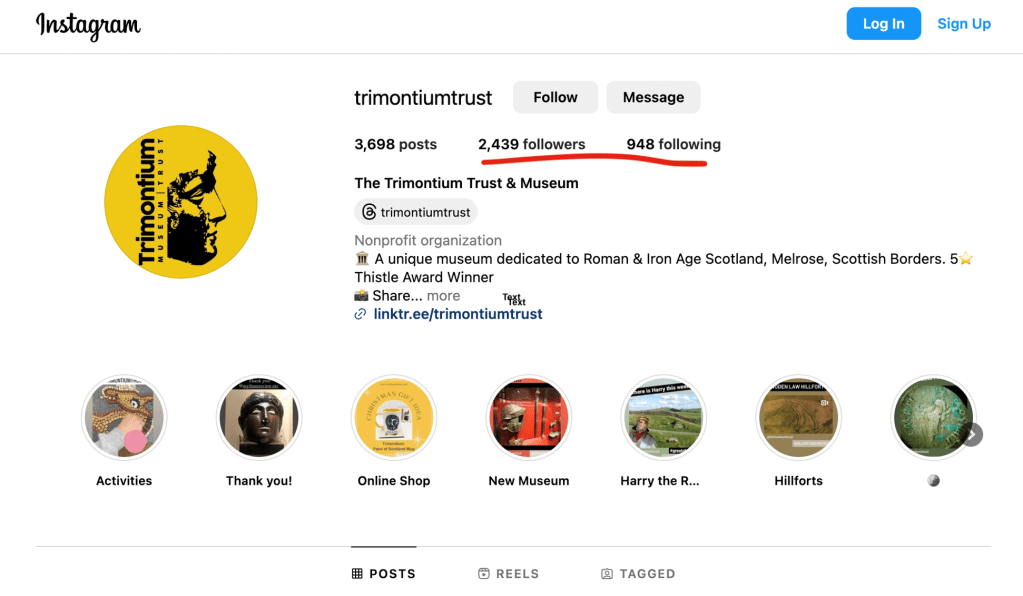
If you’re thinking of developing a career outwith social media, you’d ironically do well to scan your following and followers lists to come up with options for who you might want to approach. Think of it as a giant, ready-made contacts list, many of whom speak to your interests and could have vacancies which your digital media skills can help you secure.
One of the reasons why Trimontium came to mind for David, for example, was because of their social media presence.
He wouldn’t recommend using DMs or posts to enquire about possible opportunities – that should be done by email, over the phone, or ideally in person – but browsing your followers/following lists is a great place to start the brainstorming and shortlisting process.
Leave Social Media?
Although this isn’t necessarily a job-hunting tip, David did want to address the topic of leaving social media. He acknowledged that he had a love-hate relationship with these platforms. He found himself spending more and more time on social media, and much less time actually enjoying the things which he was using social media to promote. Being constantly connected to “everything everywhere all at once”, and the blurring of the line between social media as an occupation and social media as a preoccupation, wore down his mental health.
When Elon Musk purchased Twitter, that was his queue to go offline. Anyone thinking of doing the same will be relieved to hear that not only has going offline not significantly impacted work opportunities, but he also finds himself having more energy and better mental wellbeing which has had a positive impact on just about every aspect of life, including his professional one.
So if you’re thinking of nuking your personal social media accounts, he is firmly in the ‘do it now and never look back!’ camp.
If you do want to connect with David, you can still find him on LinkedIn or head to the Trimontium Museum to see some of his work.

 SHSMG
SHSMG 