For our first event of 2024, we heard from Dr. Tom Horne, volunteer Communications Manager at The Govan Stones, Group Communications Manager at the Red River Archaeology Group, and the person who runs the Love Archaeology social media accounts.
With his colleagues, Tom coordinates and produces the new Govan Early Medieval (GEM) podcast (Spotify), a series about early-medieval Europe by volunteers at the Govan Stones museum, which houses a world-class collection of Viking-Age carved stones. He’s also been a presenter of The Shindig podcast (YouTube; Spotify; Apple Podcasts) since March 2023. The Shindig is an award-winning archaeology, history and heritage podcast from the Red River Archaeology Group in which Tom and his colleague, and show producer, Luke Barry chat to experts in the field, authors, and each other to dig up the latest in archaeological research.
Tom talked about his experience working on both of these podcasts during this event.

Tips for Getting Started with a Podcast
- Schedule time in to listen to the podcasts that you like and consider analytically what you like about them. Is it a regular segment? A joke? The format? The gender split among the speakers? Then integrate those elements into your own podcast.
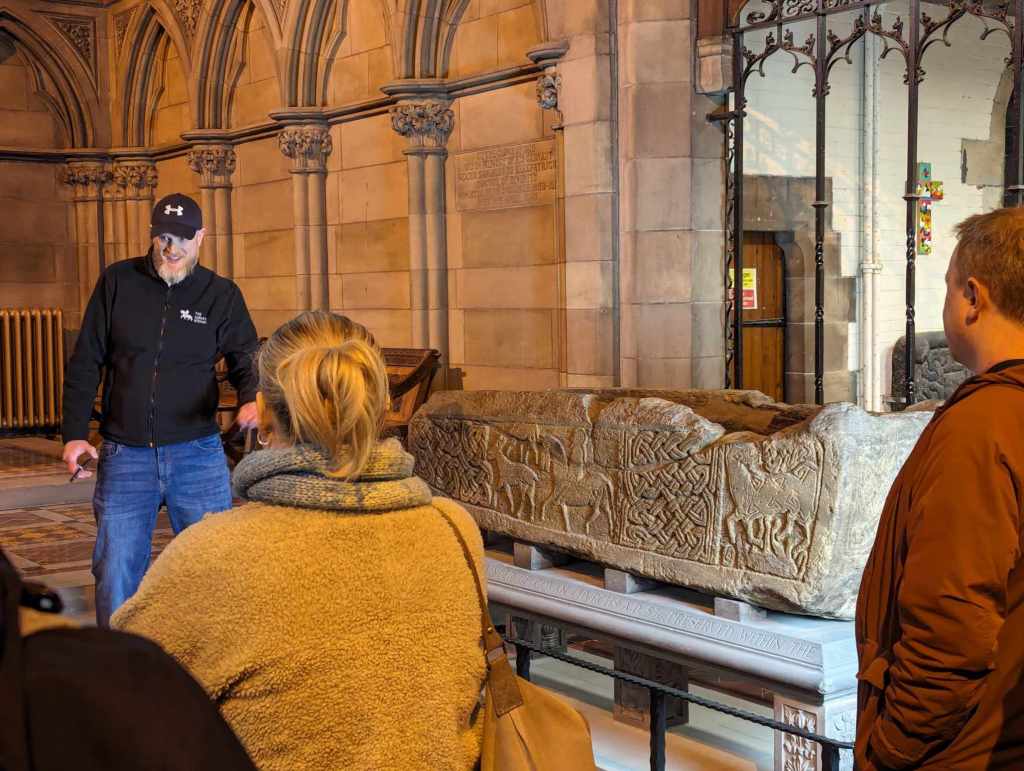
- Once you have an idea of a theme, start by recording an episode on something you’re particularly passionate about so that the conversations flow easily. The second episode of GEM, for example, simply described an artefact (the Govan Sarcophagus).
- You don’t need anything other than a decent smartphone to get started. Your mobile phone has one of the best microphones you can get – but make sure you point it towards the mouth of the speaker if there are multiple people speaking, as it’s a directional microphone. At a later stage, you may want to consider investing in a separate microphone as this can help increase your confidence and internal stakeholder buy-in, but a smartphone is fine for now.
- Try using a basic podcasting app such as Spotify for Podcasters to easily record your episodes.
- Plan to record a series in one go (or at least a handful of episodes) as this will be so much easier than recording, editing and sharing one episode then not knowing where to go next. This also enables you to ensure regularity in the dissemination of your podcast. Listeners will tune in if they can expect a new episode at the same time each month. And note that you can be downgraded by the algorithm if you don’t keep to a schedule.
- Think about what people will want and where they will want to consume it. Platforms like Spotify and Apple Podcasts are the most popular ones so that’s where you want to be.
- In theory, you can record, edit, upload and share an episode in a day using a podcasting app. If you are making a video version of your podcast, using software like Da Vinci Resolve (free) or Adobe Premier Pro, give yourself more time (it takes maybe an eight-hour full day to edit and process). Be sure to also factor in research time (such as reading a guest’s book).
- Consider your tone and what you can and can’t say, especially if you’re recording on behalf of an organisation.
- When considering whether your podcast will be continuous or released in series, consider your work calendar. For example, Tom reckons that the GEM podcast will naturally flow when the Govan Stones museum is open from April to October, but may return to more irregular episodes in the off-season.
Tips for Dealing with Podcast Guests
- Do set parameters with your guests on topics that can’t be covered before you record with them.
- Make sure you check how to say the names of guests and organisations beforehand!
- If you’re having a guest on the podcast, send them a page of bulleted notes and/or questions beforehand to introduce them to what you’re going to be discussing.
- Ask your guests to come prepared with different ideas of topics to talk about so there are options if the conversation runs dry. It also means you will have options when it comes to adding images.
- Listeners tend to like episodes with multiple guests (e.g. the BBC’s In Our Time or The Shindig episode on Viking Dublin Dogs).
- Don’t feel like you need to interview sector celebrities. Some of The Shindig’s best numbers come from episodes interviewing in house experts, not people on TV. The public can be just as engaged by an unknown person enthusiastically talking about a particular area of expertise.
Tips for Recording a Podcast
- Consider recording a collection of “wild tracks”, something to drop in between interviews to situate your audience in your location. This could be the sounds of birds, distant industrial/daily life noise, or visitors in a busy museum gallery. Don’t worry about this being a bit rough and ready.
- Be sure to reference any changes in the audio (e.g. an echo in a church if you’re moving around or splicing together audio clips from different locations). Situate yourself in these locations with dialogue so the audience can “follow” you.
- Don’t make your episodes too long. Your max run time of each episode should be around 45-75 minutes depending on how strong the conversation is. And don’t be tempted to split a very long episode into two as people don’t tend to come back to hear the second part.
- If recording interviews online through Zoom, consider using Zoom’s AI summary of the meeting. Transcripts can easily be made into blog posts which can also help promote the recording. Plus, you can offer a copy of transcripts to your guests to review after the fact to ease any concerns they may have about what they’ve said.
Tips for Editing Your Podcast
- Once you’ve become established, invest more time into learning how to use editing software as there’s only so far you can go with the apps. Tom is training to use Audacity editing software (free), but he also intends to try editing audio on DaVinci Resolve (also free), a programme he uses currently for videos.
- If creating video content from your podcast recordings will be too time consuming for you, consider embedding relevant images from the discussion into the show notes.
Tips for Promoting Your Podcast
- Take your audio content and create video from it to upload to YouTube too, as it might be more popular in video format. You can just have a holding slide throughout the episode, or splice in images referenced in the episode.
- Ask your guests to share the podcast episode with their own followers to boost your reach. Tom recommends asking guests to not quote post when sharing the podcast, and instead to create their own native post. You can send an FAQ sheet to a guests or collaborator early on with a screenshot of what the share should look like.
- Use your existing social media following to crack the YouTube audience.
- Experiment with short form social media content – such as Instagram Reels and YouTube Shorts – to promote the podcast. Build time into your editing schedule to make these, but bear in mind that with YouTube Shorts, you really need to put one out every day for the algorithm to pick it up and share it with people who aren’t already in your audience.
- If you have a Linktree account, add a link to the podcast there.
- Collaborate with other creators! (e.g. The Shindig collaborated with Dig It! during their Scotland Digs 2023 summer campaign). And other podcasters are always looking for content, so don’t be afraid to “cold call”.
- Put yourself up for awards!
- In the off season between episodes, you can use clips to bring audiences to old episodes.
Tom reminded attendees that your first episode of a podcast will likely get zero listens, and that’s fine! Remember that not everyone will care about your topic. But if you focus on reaching the people you want to engage, you’ll build a following. He also encouraged us to be prepared to adapt and have spin offs and lead with what’s popular.
Inspired by Tom’s work? Subscribe to The Shindig and Govan Early Medieval podcasts, head over to LinkedIn to connect with Tom or follow The Govan Stones on Facebook and X. And don’t forget to sign up to the SHSMG e-newsletter or follow us on X to find out about our next event and blog post.

 SHSMG
SHSMG 